

Omnichannel WhatsApp: Definition, Benefits, How It Works, and Platform Recommendations
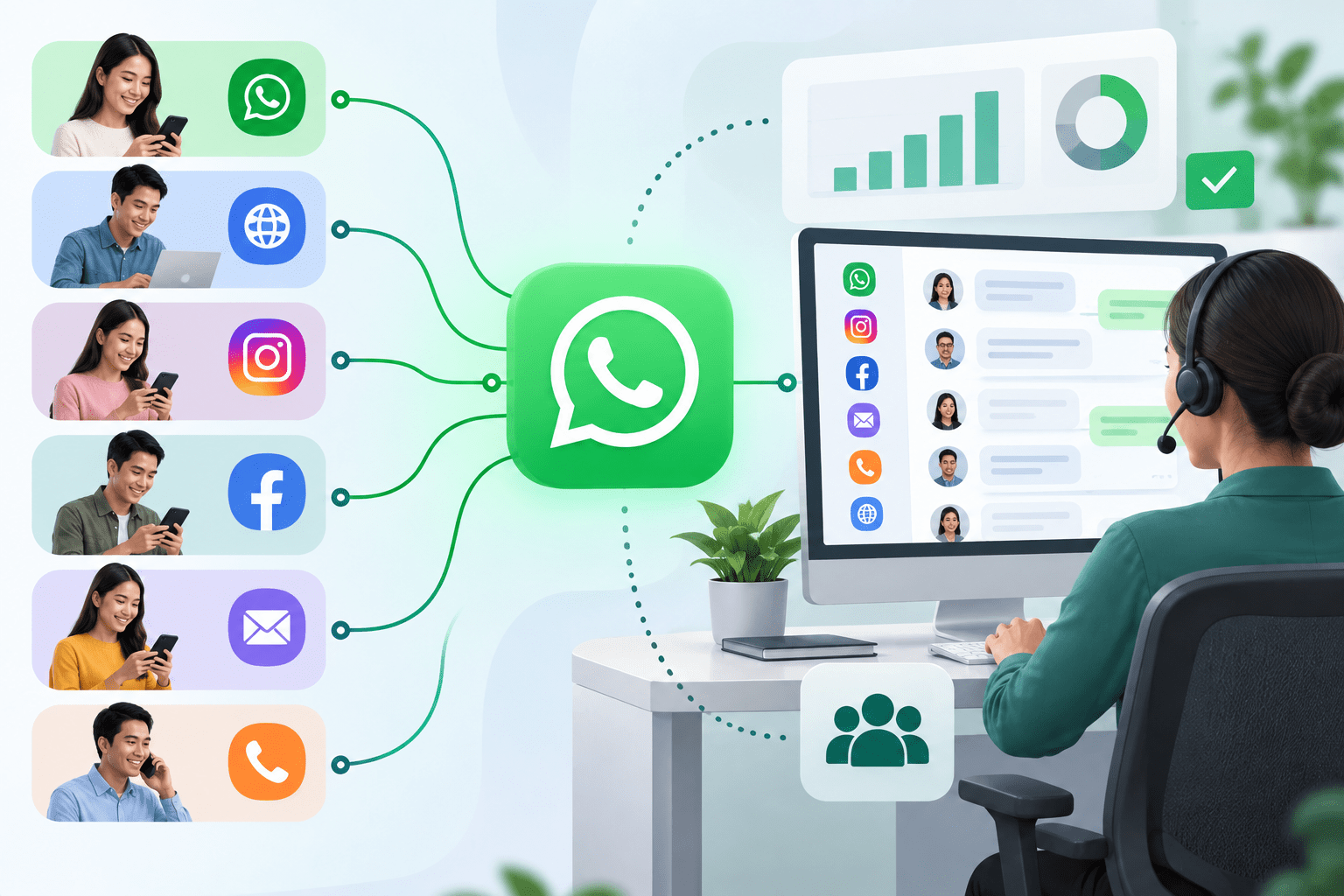
WhatsApp has become one of the most important channels for businesses to communicate with customers. From product questions, consultations, and sales follow-ups to after-sales service, many customer conversations happen on WhatsApp.
But as message volume keeps growing, managing communication only through the WhatsApp app can become a challenge. The team has to respond to many customers, assign conversations to agents, follow up, and make sure no message is missed.
In this situation, omnichannel WhatsApp helps businesses manage communication in a more centralized way. The team can handle conversations through one system, split work between agents, run automation, and monitor communication activity in a more structured way.
So what is omnichannel WhatsApp, and how does it work?
What Is Omnichannel WhatsApp?
Omnichannel WhatsApp is a system that helps businesses manage WhatsApp communication in one integrated platform.
With this system, WhatsApp is no longer used from just one app or device. Instead, the company can connect it to a communication dashboard, customer service, chatbots, automation, and other business systems.
For example, when a customer sends a message through WhatsApp, the system can put that conversation straight into the dashboard. The team can then assign the chat to an available agent, see the conversation status, respond, and record the customer’s activity.
That is why omnichannel WhatsApp does not only help businesses receive messages, it also helps organize the entire customer communication process in a more structured way.
What Are the Benefits of Omnichannel WhatsApp for Businesses?
The more customers contact a business, the more important it is to have a system that can organize communication well.
Omnichannel WhatsApp offers several key benefits.
1. Centralizing Conversations in One Dashboard
The team no longer needs to manage conversations separately.
With a central dashboard, agents can see and handle customer messages from one system. Besides keeping work tidier, this also helps reduce the risk of chats getting a late response.
2. Making It Easy for Many Agents to Manage WhatsApp
One business number often has to be used by several customer service or sales staff.
With an omnichannel system, the business can give access to several agents at once. The company can also set up conversation assignment so each agent knows which customers they need to handle.
3. Speeding Up Customer Responses
Customers generally do not want to wait too long for an answer.
That is why businesses can use auto replies, chatbots, automatic chat assignment, and quick replies to speed up service.
If a question needs further help, an agent can continue the conversation without having to start the process from the beginning.
4. Helping the Team Follow Up
Not every customer makes a transaction right after the first conversation.
Some customers need more information, reminders, or follow-up before making a decision.
With automation, the team can organize follow-up communication in a more structured way, so the chance of customers being forgotten becomes smaller.
5. Making Performance Evaluation Easier
Omnichannel WhatsApp also helps businesses look at communication activity based on data.
Companies can monitor the number of messages, response speed, agent performance, and communication results. This way, the team can see which parts of service or sales still need improvement.
How Does Omnichannel WhatsApp Work?
From the user’s side, the way omnichannel WhatsApp works is actually quite simple.
First, the business connects its WhatsApp Business number to a platform that supports communication management.
Next, every customer message goes into the dashboard. From there, the system can assign chats to agents, run a chatbot, send automatic responses, or forward information to other systems.
Simply put, the flow looks like this:
A customer contacts you on WhatsApp → the message enters the omnichannel platform → the system organizes the conversation → an agent or chatbot responds → the communication activity is recorded in the dashboard.
Businesses can also connect the platform to internal systems through an API. This way, WhatsApp communication can follow customer activity.
For example, after a customer makes a transaction, the system can send a confirmation automatically. Then, when a payment is nearly due, the system can send a reminder without waiting for the team to follow up manually.
So omnichannel is not only useful for customer service. Sales, marketing, and operations teams can also use it according to their needs.
Choosing an Omnichannel WhatsApp Platform
Once you understand how it works, the next step is choosing a platform that fits your business needs.
An omnichannel WhatsApp platform should do more than provide a dashboard for receiving messages. Businesses also need to consider the platform’s ability to handle many agents, manage chat distribution, run automation, build chatbots, integrate with other systems, and provide reports.
Companies also need to think about scalability. A system that is enough for two customer service staff today may not be able to support the team as the number of customers grows.
For these needs, one platform you can use is Smartive by Smartme.
Smartive is a Customer Communication & Engagement Platform that uses WhatsApp Business API as part of customer communication management. Through one dashboard, businesses can manage communication, automation, chatbots, and customer engagement activities without having to set up each of them separately.
Omnichannel WhatsApp Features in Smartive
Smartive provides several features that help companies manage WhatsApp communication, from service to customer engagement.
Multi-Agent and Shared Team Inbox
The Multi-Agent Inbox lets several agents handle communication through one dashboard.
Businesses can also use auto-distribution, agent assignment, internal notes, SLA monitoring, and ticketing to organize customer conversations. This way, the team can split work more clearly and reduce the risk of missed inquiries.
Chatbot and AI Assistant
For repeated questions, businesses do not always have to wait for an agent to answer.
Smartive provides a Visual Chatbot Builder to create auto replies, greeting messages, interactive menus, order tracking, and FAQ automation. In addition, the AI Assistant can help with needs such as FAQs, appointment booking, and customer support.
This helps agents focus on conversations that need more attention.
Broadcast Automation
Businesses can also run mass communication with the Broadcast Automation feature.
With this feature, the team can send campaigns and monitor their delivery and performance. However, businesses still need to run broadcasts in line with WhatsApp policies and with customers’ consent to be contacted.
Reminder Automation
Late follow-ups can cause sales or service opportunities to be missed.
That is why Smartive provides automated reminders for needs such as leads, payments, appointments, renewals, and follow-ups.
With this automation, the team does not have to remember every communication schedule manually.
Sales and Marketing Automation
Omnichannel WhatsApp can also support the sales process.
Smartive provides audience segmentation, personalized campaigns, retargeting, and customer nurturing. With the right setup, businesses can send communication that better matches each customer’s needs.
API Integration
Every business may have different systems.
That is why Smartive provides API Integration to connect communication with needs such as campaigns, transactions, orders, ticketing, OTP, and authentication.
This integration lets WhatsApp run as part of the business process, not as a standalone communication app.
Monitoring Dashboard
Besides managing conversations, the team also needs to know the results.
With the monitoring dashboard, businesses can track messages sent, response rate, conversion rate, and agent performance. This data can be used to evaluate and improve both service and the sales process.
How Much Does the Smartive Omnichannel WhatsApp Platform Cost?
Smartive offers several packages that can be matched to the size and needs of your team.
Smartive Launch starts from IDR 2,000,000 per month, with one WhatsApp Business number, two users, a multi-agent inbox, 1,000 broadcast messages per month, and up to 3,000 customer contacts/MAU.
For growing teams, Smartive Growth is available for IDR 4,000,000 per month, with two WhatsApp Business numbers and five users.
Meanwhile, Smartive Scale is available for IDR 5,500,000 per month, with four WhatsApp Business numbers, ten users, and greater broadcast and customer engagement capacity.
For companies with specific needs, there is also Smartive Enterprise, with the number of numbers, users, capacity, and features tailored to the company’s needs. Enterprise pricing is custom.
Because every company’s communication needs are different, businesses can choose a package based on the number of agents, customer volume, automation needs, and the scale of communication they want to manage.
What Are the Advantages of Using Smartive for Omnichannel WhatsApp?
One advantage of using an omnichannel platform is that businesses do not need to build each communication need on a different system.
With Smartive, the team can combine conversation management, multi-agent, chatbots, automation, broadcasts, integration, and monitoring in one platform. This keeps operations simpler and easier to scale as the number of customers grows.
Smartive also provides local team support and package options ranging from small teams to enterprise scale. This gives companies room to start according to their needs without having to adopt an oversized configuration right away.
In the end, the main value of omnichannel is not about having many features. The system must help the team respond to customers faster, reduce repetitive work, and keep communication organized as the business grows.
Conclusion
Omnichannel WhatsApp helps businesses manage customer communication in a more centralized, faster, and more structured way.
Through one system, companies can involve several agents, run chatbots and automation, follow up, connect WhatsApp with business systems, and monitor communication results.
These needs become even more relevant as the number of customers grows and WhatsApp becomes an important part of customer service, sales, and marketing.
For businesses that need this kind of management in one platform, Smartive can be one option. Businesses can start with the features they need most, then expand their use of automation, chatbots, integration, and customer engagement as operations grow.
With the right strategy, omnichannel WhatsApp does not only help the team manage more messages, it also creates a more consistent customer communication experience from start to finish.


Transform Your Business Communication Today
Join 1000+ businesses modernizing their telecom with SME. Get started with a free consultation.